

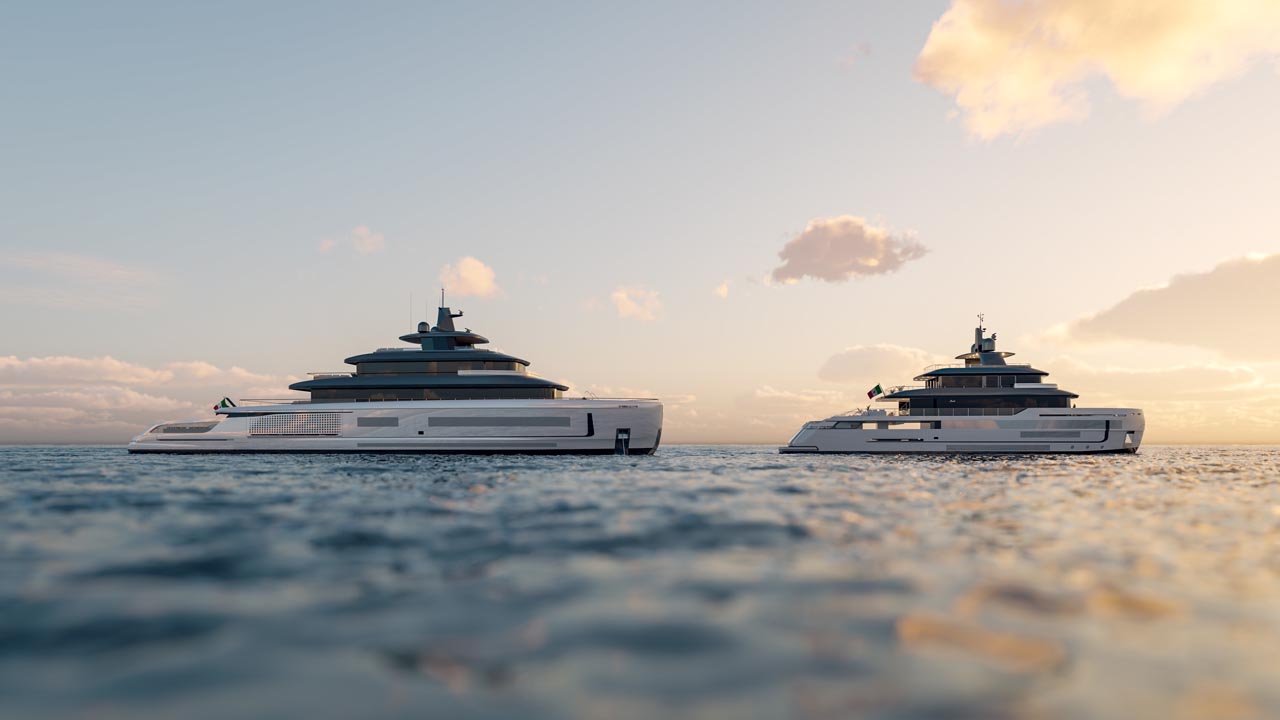

Yachting is undergoing an unprecedented transition. While innovation presents technical challenges, the true revolution is cultural: it arises from owners and shipyards who share a vision that unites progress with respect for the sea.
Today, many yacht owners are showing increasing interest in energy efficiency, reducing environmental impact, and adopting practical technologies. In numerous cases, as reported by shipyards and designers, it is the children of yacht owners who initiate these conversations. Yet even seasoned owners are becoming increasingly attentive and proactive in driving change—not only out of ethical awareness but also with the goal of enhancing the onboard experience.
New-generation owners frequently demand heightened environmental sensitivity, which often translates into a preference for displacement yachts. This shift reflects a broader philosophical change, accompanied by growing attention to fuel efficiency, as evidenced by the remarkable rise in dual-mode hulls.
Today, yacht owners are seeking versatile vessels capable of providing maximum flexibility, alternating seamlessly between displacement and planing modes without compromising efficiency. While the goal of fully zero-emission propulsion remains complex and distant, solutions already exist that can significantly reduce environmental impact— especially during anchorages, when the ability to switch off generators truly makes a difference. Here lies the most immediate challenge: remaining at anchor without running generators, while still guaranteeing silence and comfort.
Over the past two years, the availability of biofuels has increased. Through blending processes, these fuels can reduce CO₂ emissions during production. The CO₂ is then re-released during combustion, resulting in a net-zero emissions cycle. Typically derived from vegetable oils and residual fats, these biodiesels can be used in marine engines without modifications. HVO, in particular, can cut CO₂ emissions across the full life cycle (“well-to-wake”) by up to 90%, while also significantly reducing particulate matter and NOx emissions. However, limited distribution remains the main reason for their still modest adoption in yachting.
Among the shipyards that have invested concretely in this direction is the Azimut|Benetti Group, which since 2023, has been using the advanced HVOlution biofuel for sea trials, transfers, and deliveries. In line with this responsible vision, Azimut has combined HVO usage with research into materials and design: the Seadeck series employs FSC-certified teak (from responsibly managed forests adhering to strict environmental standards), low-impact paints, recycled fabrics, and hulls optimized for reduced fuel consumption, achieving up to 40% lower CO₂ emissions compared to similar yachts, according to declared data.
With the B.Yond 37M, awarded “Green Yacht of the Year 2022,” Benetti has adopted the E-Mode Hybrid system, reducing CO₂ emissions by 24% and NOx emissions by 85% compared to traditional motor yachts of similar size. The 107-meter Luminosity features a diesel-electric hybrid propulsion system that allows up to 14 hours of silent, zero-emission cruising at anchor. Confirming this strategic direction, Benetti currently has 10 hybrid superyachts under construction, including 7 units ordered exclusively within the B.Yond line.
Some shipyards, like Rossinavi, are combining artificial intelligence with solar energy. On board the catamaran SeaWolf X, an AI system learns the owner’s habits and predictively adjusts air conditioning, lighting, and energy consumption, optimizing the power collected from photovoltaic panels. All of this is integrated into a hybrid-electric platform that promises autonomy and comfort without compromise. Baglietto, meanwhile, is focusing on hydrogen with the BZERO project, developed in collaboration with Siemens Energy, RINA, H2Boat, and other Italian partners. Designed for yachts over 50 meters, it offers up to 75 hours of zero- emission autonomy at anchor or 20 miles of electric navigation. Already tested on land, the system will be installed on board in an optimized configuration. At the heart of the project is a module that produces “green” hydrogen from deionized seawater using AEM electrolyzers powered primarily by renewable energy. The power station also contributes to the shipyard’s energy needs, creating a virtuous cycle to reduce environmental impact.
Sanlorenzo, with its 50Steel, has introduced a methanol-powered fuel cell— also developed with Siemens—capable of supplying all on-board hotel-mode services without activating generators. This clean, silent technology promises a new way of experiencing life at anchor. The Ferretti Group is advancing on multiple fronts. The INFYNITO range combines solar panels, lithium batteries, and eco-friendly materials, while CRN, the group’s historic brand, has obtained RINA certification for the use of PEM fuel cells powered by green methanol, providing extended zero-emission autonomy in hotel mode.
Some projects proceed quietly, others with strong media visibility. Yet more and more shipyards are contributing to the development of a supply chain that is gradually becoming more conscious and sustainable. Internationally, the momentum is no less significant. Feadship launched Project 821, the world’s first superyacht powered by pure hydrogen fuel cells with cryogenic storage. Hydrogen, produced from green methanol, powers the onboard systems, while a diesel backup ensures long-range autonomy.
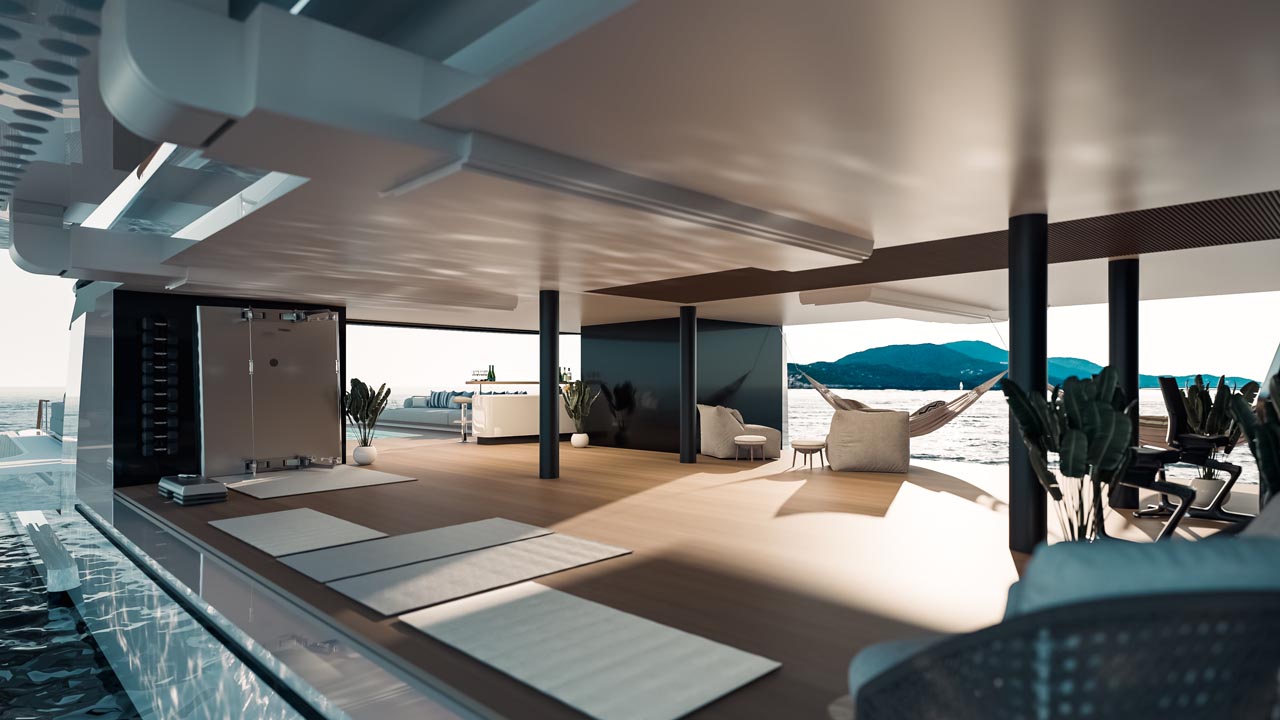
Lürssen, attraverso il suo Innovation Lab, sperimenta soluzioni fuel cell alimentate da metanolo per ridurre l’uso di motori a combustione e immagina, come obiettivo a lungo termine, uno yacht completamente privo di motori endotermici: un sogno dichiarato da Peter Lürssen. Oceanco, con il concept LILY, e Feadship, con DUNES, sperimentano materiali naturali, ventilazione passiva, propulsione ibrida e design ispirati alla biomimesi.
Eppure, nonostante le tante iniziative, manca ancora una normativa univoca dedicata allo yachting sostenibile. Le soluzioni in uso spesso si basano su riferimenti presi dallo shipping, adattati a un contesto profondamente diverso. La verità è che ogni passo avanti, oggi, è frutto di scelte volontarie, non di obblighi.
Un ruolo fondamentale, in questo scenario, lo giocano gli enti di classificazione. Organismi come RINA stanno sviluppando strumenti specifici per valutare le nuove tecnologie applicate alla nautica da diporto: dal risk assesment di sistemi a idrogeno e batterie ad alta capacità, alle notazioni ambientali che certificano comfort acustico, efficienza energetica, riduzione delle vibrazioni e delle emissioni.
Ma la transizione non può essere solo tecnologica. Serve anche preparazione umana. Le nuove soluzioni richiedono equipaggi formati, capaci di gestire impianti complessi, in sicurezza e consapevolezza.
Il cambiamento in corso non riguarda solo l’innovazione. Riguarda la mentalità. E coinvolge chi costruisce, chi arma, chi naviga, chi progetta. È una trasformazione che si fa spazio tra una firma e una scelta tecnica, tra un layout rivisto e una propulsione ripensata. Lo yachting sta imparando a guardare avanti. L’auspicio, da italiana, è che questo avvenga unendo le forze a livello nazionale, con coerenza e spirito di collaborazione, per poi portare questa visione anche su scala internazionale.
Perché la sostenibilità, in mare come nella vita, non è una moda né una destinazione. È una direzione. E chi ha il coraggio – o semplicemente il buon senso – di seguirla oggi, sta contribuendo a scrivere il futuro di un’intera industria. E, perché no, a stimolare un’evoluzione che vada oltre i confini dello yachting.